
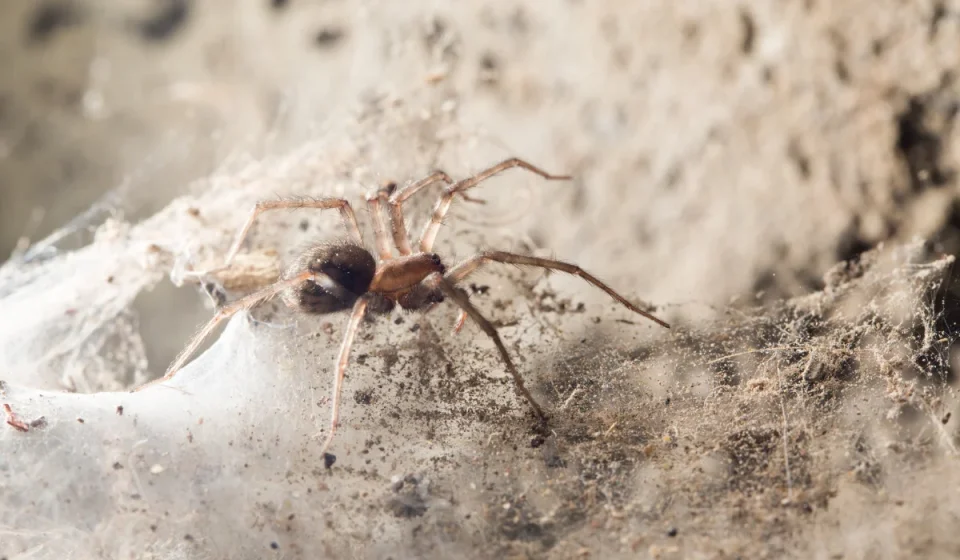
Discerning buyers know Sheridan’s charming vintage homes can come with character and history and, apparently, some rather unsavory basement-dwelling eight-legged guests. A dry climate and the nearby Rocky Mountain foothills mean spiders can stick around all year, especially in the cool, undisturbed areas below your home. More than 1,200 housing units in Sheridan were built before 1970, which include basements with stone foundations, wood framing, and tiny openings that spiders like to use to enter homes.
While DIY methods can be helpful, consulting Saela Pest Control ensures that you address the root cause, rather than just cleaning webs every weekend.
Common Spiders Found in Sheridan Basements
Many spider species have also made themselves perfectly at home in areas like Sheridan basements, which are ideal for Colorado. The most common unwanted guests are:
- House spiders build messy webs in corners of your basement and scarcely wander into your living spaces. They are harmless but prolific breeders.
- Wolf spiders are the big, fast-moving hunters that dart across a basement floor at night. Instead of web spinning, they actively hunt down their prey.
- Hobo spiders build funnel webs close to the ground and are often confused with more venomous spiders.
The real concern? Black widow spiders, found in Sheridan basements, lurk in dark corners, woodpiles, and boxes of stored goods. You can recognize them by their distinctive red hourglass marking, and their bite is venomous enough to require medical attention.
Why Basements Are Prime Real Estate for Spiders
-
Consistent Temperature Control
Basement temperatures in Sheridan are relatively stable year-round, typically ranging from 55°F to 65°F, even as outside temperatures fluctuate from winter lows to summer highs. They prefer this kind of steady stability over variations.
-
Minimal Human Traffic
The basement probably gets a visitor once a week at most. The spiders take this absence of disturbance as an invitation, erecting their webs unhindered.
-
Abundant Food Sources
Bugs also seek refuge in basements. Spiders hunt and feast on bed bugs, crickets, silverfish, and beetles
-
High Humidity Levels
Moisture barriers in older homes, particularly in Sheridan, tend to be less than adequate, as a general rule. A humidity level of 60–70% is ideal for basements that attract insects and the spiders that prey on them.
-
Dark Corners and Crevices
The stone work and the unfinished spaces provide endless opportunities to hide. During the day, spiders hide in the crevices.
-
Clutter and Storage Items
Those boxes of holiday decorations, that dusty old furniture, create dark, still places where spiders set up camp.
Prevention Tips for Older Homes In Sheridan
- Use hydraulic cement to seal foundation cracks. Settling cracks are common among older Sheridan homes and are the wee spider highways to your basement.
- Install door sweeps on basement doors, and make sure window wells are adequately covered to limit entry points
- Homes built before the 1980s often use original weather-proofing materials that have deteriorated over time.
- Eliminate any chaos, and organize storage in plastic bins, not avenues for spiders, like cardboard boxes
- Get rid of any plumbing leaks straight away, and you will want to use a dehumidifier to help keep moisture levels down, preferably under 50%
- Vacuuming frequently, especially in corners, around ceiling joists, and near stored items where webs tend to accumulate.
- No spider can cross a bridge that does not exist, so keep all outdoor vegetation at least 12 inches away from your foundation.
Why Professional Spider Control Can Help
Sometimes you may see webs and spiders occasionally, but the problem is much deeper than that. Pest control experts, such as Saela Pest Control, know that Sheridan’s older homes present specific challenges. They flag entry points you may not recognize, such as quarter-inch gaps around utility lines or deteriorated mortar joints in stone foundations. They focus their treatments not only on the spiders you see but also on the insects that draw them in the first place.
